Содержание

Claude Opus is a strong model for coding, agentic workflows, and complex engineering tasks. But not every coding request needs to run on a premium closed model. A practical Claude Opus alternative should combine strong coding ability, long-context handling, reliable API access, reasonable latency, and lower token cost. GLM-5.2, DeepSeek-V4-Pro, DeepSeek-V4-Flash, Kimi-K2.6, and DeepSeek-V3.2 each fit different coding needs, from long-context engineering to high-volume coding assistance.
Why Developers Look for Claude Opus Alternatives
Developers usually look for a Claude Opus alternative when cost, flexibility, or workflow fit becomes important. The main reasons include:
Lower API cost: Agentic coding often repeats file reading, planning, editing, testing, debugging, and revision. At scale, input, output, and cached-input pricing can change the total cost.
Long-context coding: Coding agents may need source files, API contracts, logs, documentation, and previous tool calls in one workflow. A 1M-token context window is useful for repository-level reasoning and long-horizon engineering.
Open-weight access: Open-weight models give teams more control over evaluation, deployment strategy, customization, and provider choice.
Task-based model routing: Simple tasks such as code explanation, unit-test drafting, PR summaries, and log analysis may not require the most expensive model.
API compatibility: A useful alternative should work with familiar SDKs, REST APIs, playgrounds, and coding-agent integrations, so teams can test it without rebuilding their stack.
What Counts as a Claude Opus Alternative for Coding?
A model should not be called a Claude Opus alternative only because it is cheaper. For coding teams, the model must be useful in real development workflows.

A strong coding alternative should be able to:
Understand multi-file project context
Generate runnable code, not only isolated snippets
Follow detailed implementation constraints
Debug errors from logs, stack traces, and test output
Support tool-use or agentic workflows
Maintain instruction consistency across long tasks
Handle cached context efficiently
Provide a stable API path for testing and production use
This is why the comparison should include quality, context window, license, cached-input pricing, and workload-level cost. A model with a very low token price may still be expensive in practice if it requires more retries, produces longer-than-needed output, or needs more developer correction. A premium model may still be worth the cost when failure is expensive.
The most useful approach is model routing: use the strongest model where quality matters most, and use lower-cost alternatives where the task is repetitive, recoverable, or easy to verify.
Models Included: GLM-5.2, DeepSeek-V4-Pro, DeepSeek-V4-Flash, Kimi-K2.6, and DeepSeek-V3.2
This comparison uses Claude Opus 4.8 as the Claude Opus reference point. Claude Opus 4.8 standard pricing is $5 per million input tokens and $25 per million output tokens, and Anthropic’s prompt caching documentation states that cache read tokens are priced at 0.1 times the base input token price.
The alternative models in this article cover different coding needs:
Model | Main Role in a Coding Stack |
|---|---|
Strong long-context coding and agentic engineering alternative | |
High-capability open-weight option for reasoning, coding, and agentic tasks | |
Cost-efficient model for high-volume coding assistance | |
Open-weight agentic and multimodal model for broader workflow comparison | |
Lower-cost baseline for coding, reasoning, and tool-use workflows |
These models should not be treated as identical replacements. GLM-5.2 and DeepSeek-V4-Pro are more relevant when coding quality and long-context reasoning matter. DeepSeek-V4-Flash and DeepSeek-V3.2 are more relevant when cost, speed, and scale matter. Kimi-K2.6 is useful when teams evaluate broader agentic or multimodal workflows.
Public Benchmark Signals: Artificial Analysis and Code Arena
Public benchmarks help developers understand model direction, but they should not be treated as final proof of coding quality. Real performance still depends on the task type, prompt, tool setup, repository structure, framework, and evaluation method.
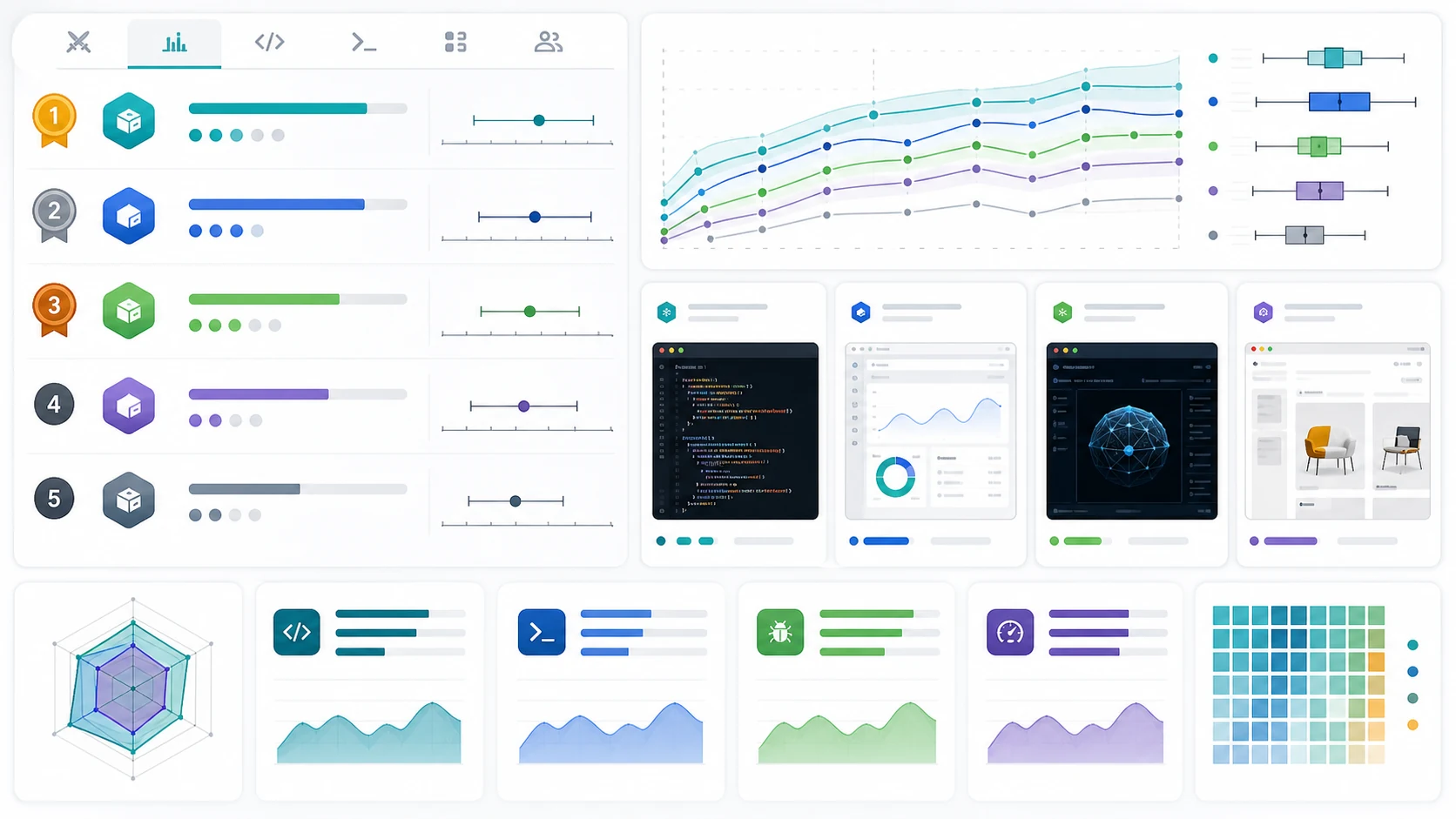
Code Arena WebDev Overall is useful for frontend and agentic web development because it focuses on front-end web development tasks, including agentic coding workflows that require multi-step reasoning and tool use. On the June 19, 2026 leaderboard, GLM-5.2 (max) ranked #2, Claude Opus 4.8 thinking ranked #3, Claude Opus 4.8 ranked #6, and Kimi-K2.6 ranked #13.
This does not mean GLM-5.2 is better than Claude Opus in every coding scenario. It does show that GLM-5.2 is highly competitive in frontend and web-development-oriented workflows. That makes it worth testing for UI generation, landing pages, prototypes, dashboards, component logic, and interactive demos.
DeepSeek-V4 also provides a useful comparison point for open-weight coding models. DeepSeek-V4-Pro has 1.6T total parameters and 49B active parameters. DeepSeek-V4-Flash has 284B total parameters and 13B active parameters. DeepSeek describes V4 as a cost-effective 1M-context release, with Pro positioned for higher capability and Flash positioned as the faster and more economical option.
This makes DeepSeek-V4-Pro more suitable for harder reasoning, coding, and agentic tasks. DeepSeek-V4-Flash is better suited to high-volume coding assistance, first-pass analysis, summaries, and repetitive development tasks.
Kimi-K2.6 is another useful reference point. Code Arena shows Kimi-K2.6 as a Modified MIT model with a 262.1K context window on the WebDev leaderboard. It is worth including when teams compare broader agentic and multimodal workflows.
The main takeaway is simple: open-weight models are now serious candidates for many coding workflows, but teams should still test them against their own repositories, prompts, tools, and review standards.
Context Window and Open-Weight Licensing Comparison
Context length matters because coding agents often need to keep many files, instructions, test results, and intermediate decisions in memory. Long context does not automatically create better code, but it reduces the need to compress or discard project information during complex tasks.
Model | Context Window | License / Access Positioning | Coding Relevance |
|---|---|---|---|
Claude Opus 4.8 | 1M | Proprietary | Premium coding, knowledge work, and agentic workflows |
GLM-5.2 | 1049K | MIT / open-weight positioning | Strong long-context coding and frontend generation |
DeepSeek-V4-Pro | 1049K | MIT | High-capability reasoning, coding, and agentic tasks |
DeepSeek-V4-Flash | 1049K | MIT | Lower-cost long-context coding assistance |
Kimi-K2.6 | 262K | Modified MIT / open-weight positioning | Agentic and multimodal workflows |
DeepSeek-V3.2 | 164K | MIT-positioned DeepSeek model family | Lower-cost coding and reasoning baseline |
GLM-5.2, DeepSeek-V4-Pro, and DeepSeek-V4-Flash are the most direct long-context alternatives in this comparison because they support around 1M tokens. Kimi-K2.6 and DeepSeek-V3.2 remain useful, but their smaller context windows make them better suited to scoped tasks, selected file sets, or tool-assisted workflows where the agent retrieves only the most relevant context.
API Pricing and Cache Read Cost Comparison
Token pricing becomes important when coding workflows repeat the same repository context across multiple requests. Cached-input pricing can reduce cost when the same large prompt, file set, or documentation block is reused.
Claude Opus 4.8 standard pricing is $5 per million input tokens and $25 per million output tokens. Because cache read tokens are priced at 0.1 times the base input token price, Claude Opus 4.8 cache reads are effectively $0.50 per million tokens under standard pricing.
Current API prices for GLM-5.2, DeepSeek-V4-Pro, DeepSeek-V4-Flash, Kimi-K2.6, and DeepSeek-V3.2 are shown per million tokens.
Model | Input / M Tokens | Cached Input / M Tokens | Output / M Tokens |
|---|---|---|---|
Claude Opus 4.8 | $5.00 | $0.50 | $25.00 |
GLM-5.2 | $1.302 | $0.26 | $4.092 |
DeepSeek-V4-Pro | $1.60 | $0.135 | $3.135 |
DeepSeek-V4-Flash | $0.13 | $0.028 | $0.28 |
Kimi-K2.6 | $0.77 | $0.20 | $4.00 |
DeepSeek-V3.2 | $0.27 | $0.135 | $0.42 |
GLM-5.2 is much lower than Claude Opus 4.8 on both input and output tokens. DeepSeek-V4-Pro has a similar input range to GLM-5.2, lower output pricing, and a lower cached-input price. DeepSeek-V4-Flash is the clear cost leader among the models in this comparison. DeepSeek-V3.2 is also inexpensive, though its smaller context window makes it less directly comparable for repository-scale tasks.
Same Coding Workload Cost: Claude Opus vs. Open-Weight Alternatives
A cost comparison becomes clearer when applied to the same coding workload.

Assume a coding-agent request uses:
100K input tokens
20K output tokens
No cached input
Estimated cost:
Model | Estimated Cost |
|---|---|
Claude Opus 4.8 | $1.00 |
GLM-5.2 | $0.212 |
DeepSeek-V4-Pro | $0.223 |
DeepSeek-V4-Flash | $0.0186 |
Kimi-K2.6 | $0.157 |
DeepSeek-V3.2 | $0.0354 |
In this workload, GLM-5.2 costs about 79% less than Claude Opus 4.8. DeepSeek-V4-Pro costs about 78% less. DeepSeek-V4-Flash costs about 98% less. DeepSeek-V3.2 also has a major cost advantage, though its smaller context window makes it less directly comparable for repository-scale tasks.
Now assume a cache-heavy workflow:
100K cached input tokens
20K new input tokens
20K output tokens
Estimated cost:
Model | Estimated Cost |
|---|---|
Claude Opus 4.8 | $0.65 |
GLM-5.2 | $0.134 |
DeepSeek-V4-Pro | $0.108 |
DeepSeek-V4-Flash | $0.011 |
Kimi-K2.6 | $0.115 |
DeepSeek-V3.2 | $0.027 |
Cache read cost changes the economics of coding agents. If the same repository summary, API documentation, style guide, or architecture context is reused across multiple turns, cached input can lower total cost significantly.
However, token price is not the only production cost. Teams should also evaluate answer quality, retries, latency, tool-call reliability, security constraints, and developer review time. A model that saves token cost but creates more debugging work may not be cheaper overall.
Where GLM-5.2 Is the Strongest Fit
GLM-5.2 is the strongest fit when a team wants a Claude Opus alternative that still feels close to frontier coding behavior in long-context workflows.
It is especially relevant for:
Frontend code generation
UI prototypes and landing pages
Interactive dashboards
Component-level implementation
Codebase understanding
Long-context engineering tasks
Agentic coding workflows with repeated tool calls
Cost-sensitive Claude-style coding experiments
GLM-5.2 combines a 1049K context window, strong WebDev benchmark signals, and lower token pricing than Claude Opus 4.8. That makes it a practical first model to test when replacing part of a Claude Opus coding pipeline. It is not only cheaper; it is also positioned for long-horizon coding tasks where context retention matters.
For frontend and product engineering teams, GLM-5.2 may be especially attractive because public WebDev signals show strong performance in web-development-oriented tasks. Code Arena’s WebDev leaderboard places GLM-5.2 (max) above Claude Opus 4.8 thinking and Claude Opus 4.8 in that specific evaluation context.
That said, teams should still run their own test set. A good internal benchmark should include real tickets, existing repository conventions, framework-specific constraints, linting rules, unit tests, and review criteria from the engineering team.
Where DeepSeek-V4-Flash Has the Cost Advantage
DeepSeek-V4-Flash has the clearest cost advantage in this comparison.
It is best suited for tasks where volume matters more than maximum reasoning depth, such as:
Code explanation
Simple refactoring suggestions
Test-case drafting
Log and stack-trace summarization
Documentation generation
Pull request summaries
API migration notes
High-frequency coding assistant requests
First-pass analysis before routing to a stronger model
DeepSeek-V4-Flash supports a 1049K context window and has very low input, cached-input, and output pricing. That combination makes it useful for large-context workflows where many requests do not require the most capable model.
The key is to route tasks carefully. DeepSeek-V4-Flash may be a strong default for inexpensive coding assistance, but more complex problems may still benefit from GLM-5.2, DeepSeek-V4-Pro, or Claude Opus. Examples include ambiguous architecture decisions, deep debugging across many files, security-sensitive changes, complex framework migrations, and tasks where a wrong answer is expensive.
A practical routing pattern could look like this:
Task Type | Suggested Model Direction |
|---|---|
Quick code explanation | DeepSeek-V4-Flash or DeepSeek-V3.2 |
PR summary | DeepSeek-V4-Flash |
Long-context frontend generation | GLM-5.2 |
Complex codebase reasoning | GLM-5.2 or DeepSeek-V4-Pro |
Cost-sensitive bulk coding assistance | DeepSeek-V4-Flash |
Hardest unresolved engineering tasks | Claude Opus or strongest validated model |
Multimodal agentic evaluation | Kimi-K2.6 as a comparison option |
This kind of routing avoids the mistake of forcing one model to handle every coding task.
What These Alternatives May Not Replace
A Claude Opus alternative is not always a full Claude Opus replacement.
Claude Opus may still be preferred when the workflow requires maximum reliability, difficult multi-step reasoning, high-stakes enterprise review, complex tool orchestration, or performance that has already been validated internally. Claude Opus 4.8 remains a premium model with $5 per million input tokens and $25 per million output tokens under standard pricing.
Open-weight alternatives may also require more evaluation work. Teams should check:
Code correctness on real repositories
Framework-specific behavior
Instruction-following consistency
Tool-call reliability
Security and privacy requirements
Hallucination behavior
Output verbosity
Latency under load
Cost after retries
Compatibility with existing coding agents
DeepSeek-V4-Pro and DeepSeek-V4-Flash show strong capability and cost signals, but model fit still depends on the workload. The best strategy is not to ask, “Which model replaces Claude Opus completely?” A better question is:
Which model can replace Claude Opus for this coding task, at this quality bar, with this latency target, and this cost constraint?
How to Try a Claude Opus Alternative on SiliconFlow
After narrowing down the right model type, the next step is to test it in a real coding workflow. Developers can start in the Playground, run the same coding prompts across GLM-5.2, DeepSeek-V4-Pro, DeepSeek-V4-Flash, Kimi-K2.6, and DeepSeek-V3.2, then compare output quality, latency, token usage, and retry rate.
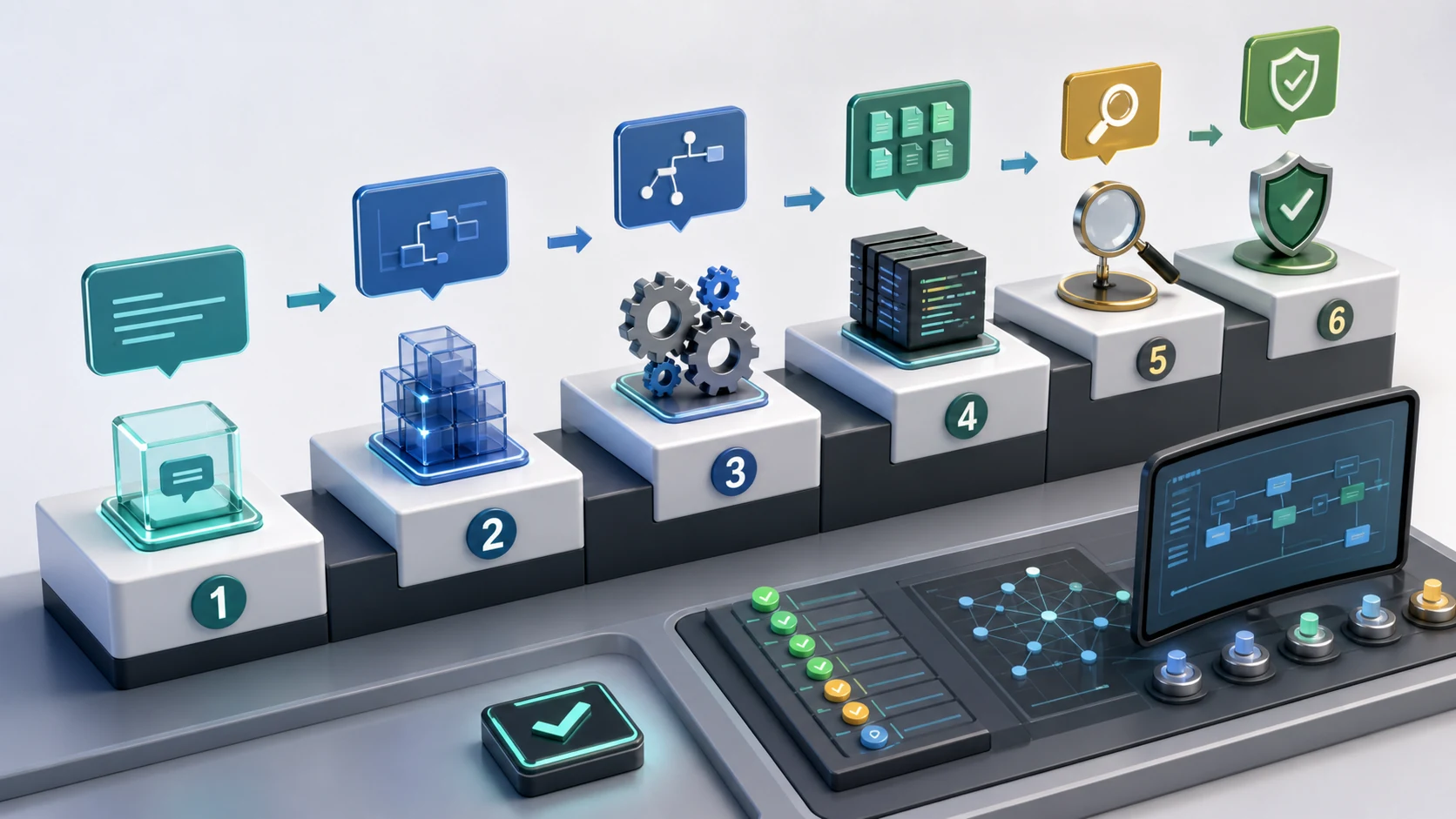
For API integration, teams can use an OpenAI-compatible interface and replace the model ID with the target model. This makes it easier to test alternatives inside existing coding agents, IDE tools, evaluation scripts, or internal developer platforms without rebuilding the full application stack.
A practical migration test should include:
One simple task, such as code explanation or PR summarization
One medium task, such as unit-test generation or API migration
One hard task, such as multi-file debugging or frontend implementation
One cache-heavy workflow that reuses the same repository context
One tool-use workflow, if the application depends on agentic coding
The goal is not to replace Claude Opus in one step. A better approach is to route work by task difficulty. DeepSeek-V4-Flash can handle high-volume coding assistance, GLM-5.2 can be tested for long-context engineering and frontend generation, and DeepSeek-V4-Pro can be evaluated for harder reasoning tasks. Teams can keep Claude Opus for the most sensitive or difficult workflows while moving suitable tasks to lower-cost alternatives.
With this approach, teams can move gradually: test the models on real coding tasks, compare cost and output quality, and route the right workloads to the right model when the results are stable enough for production.
Common Questions About Claude Opus Alternative for Coding: GLM-5.2 and DeepSeek-V4 Compared
Q1. Is GLM-5.2 a Claude Opus Alternative for Coding?
Yes. GLM-5.2 can be a practical Claude Opus alternative for coding tasks that need long context, frontend generation, codebase understanding, and agentic engineering workflows. It is especially worth testing when teams want strong coding quality at a lower token cost than Claude Opus.
Q2. Is DeepSeek-V4-Pro Better Than DeepSeek-V4-Flash for Coding?
DeepSeek-V4-Pro is stronger for complex reasoning, coding, and agentic tasks. DeepSeek-V4-Flash is better when cost and throughput matter more. For many teams, Pro fits harder coding tasks, while Flash fits high-volume coding assistance.
Q3. Which Model Is the Cheapest Claude Opus Alternative in This Comparison?
DeepSeek-V4-Flash has the lowest token cost in this comparison. It is especially cost-effective for repetitive coding support, summaries, documentation, and first-pass analysis. DeepSeek-V3.2 is also low-cost, but it has a smaller context window.
Q4. Does Lower Token Cost Always Mean Lower Total Cost?
No. Token cost is only one part of total cost. A cheaper model may require more retries, produce incorrect code, create longer outputs, or increase developer review time. Teams should evaluate model quality and total workflow cost together.
Q5. Why Does Cache Read Pricing Matter for Coding Agents?
Coding agents often reuse the same repository context, project instructions, dependency notes, or documentation across multiple turns. Cache read pricing reduces the cost of reusing repeated context, which is especially important for long-context coding workflows.
Q6. How Do I Migrate From Claude Opus to These Alternatives?
Start by testing the same coding prompts across several models instead of switching all traffic at once. Keep the task, context, and evaluation criteria the same, then compare code correctness, latency, token cost, retry rate, and developer review time. For API use, update the model ID in an OpenAI-compatible request and validate the workflow in a staging environment before routing production traffic.