Daftar Isi
Yes. GLM-5.3 is well suited to complex coding and agent-driven software engineering. Its strongest use cases include repository-level debugging, terminal operations, multi-file refactoring, and long-running tasks that require repeated tool calls.
GLM-5.3 is now available on SiliconFlow, where developers can test it in the Playground before connecting it to existing coding tools, agents, or evaluation harnesses through an OpenAI-compatible API.
Its fit is narrower for visual development, instant autocomplete, and other latency-sensitive workloads. GLM-5.3 accepts text only, keeps reasoning enabled on every request, and still has limited independent evaluation data because it is new. Its one-million-token context window is valuable, but it does not guarantee accurate understanding of every file placed in the prompt.
This analysis reflects publicly available information and model availability verified on August 22, 2026.
What Is GLM-5.3 Designed to Do?
GLM-5.3 is Z.ai’s flagship text model for complex software engineering and long-horizon agent tasks. It uses the same base model as GLM-5.2; the reported improvements come from additional post-training rather than a new foundation architecture.
That distinction matters. The main upgrade is not simply broader knowledge or a larger parameter count. Z.ai trained GLM-5.3 on more executable, verifiable environments that resemble real engineering work. These environments require the model to inspect systems, modify code, run tools, evaluate results, and continue working after an unsuccessful attempt.
The model therefore targets work such as:
Diagnosing problems across multiple files
Implementing and testing repository-level changes
Operating in terminal-based development environments
Coordinating several tools over many steps
Maintaining task state during long agent sessions
Analyzing source code for security weaknesses
According to the official GLM-5.3 documentation, the model supports function calling, streaming responses, streamed tool-call arguments, context caching, and structured output. These capabilities make it more relevant to coding agents than to basic code completion alone.
Developers can verify these capabilities with their own workload in the SiliconFlow Playground. Start with one representative repository task, define the expected result and tests, and compare the model’s output with your current coding workflow before expanding the evaluation.
Which Coding and Agent Tasks Benefit Most From GLM-5.3?
GLM-5.3 coding performance should be evaluated by task type. A model that performs well in a terminal agent may not be the fastest or most economical choice for generating a five-line function.
Task | Expected Fit | Why |
|---|---|---|
Multi-file debugging | Strong | The model can combine code, logs, tests, and configuration within one working context. |
Repository refactoring | Strong | Long context and agent training support changes that span modules and dependencies. |
Terminal automation | Strong | Public results show large improvements on executable command-line tasks. |
Test generation and repair | Strong | The model can generate tests, run them through an agent, and revise failed changes. |
Backend and infrastructure work | Strong | These tasks benefit from planning, tool use, logs, and repeated verification. |
Defensive code review | Promising | GLM-5.3 reports strong vulnerability-discovery results, although expert validation remains necessary. |
Inline autocomplete | Mixed | Always-on reasoning may add unnecessary latency to short, predictable completions. |
Screenshot-to-code | Poor | GLM-5.3 accepts text only and cannot inspect screenshots or design files directly. |
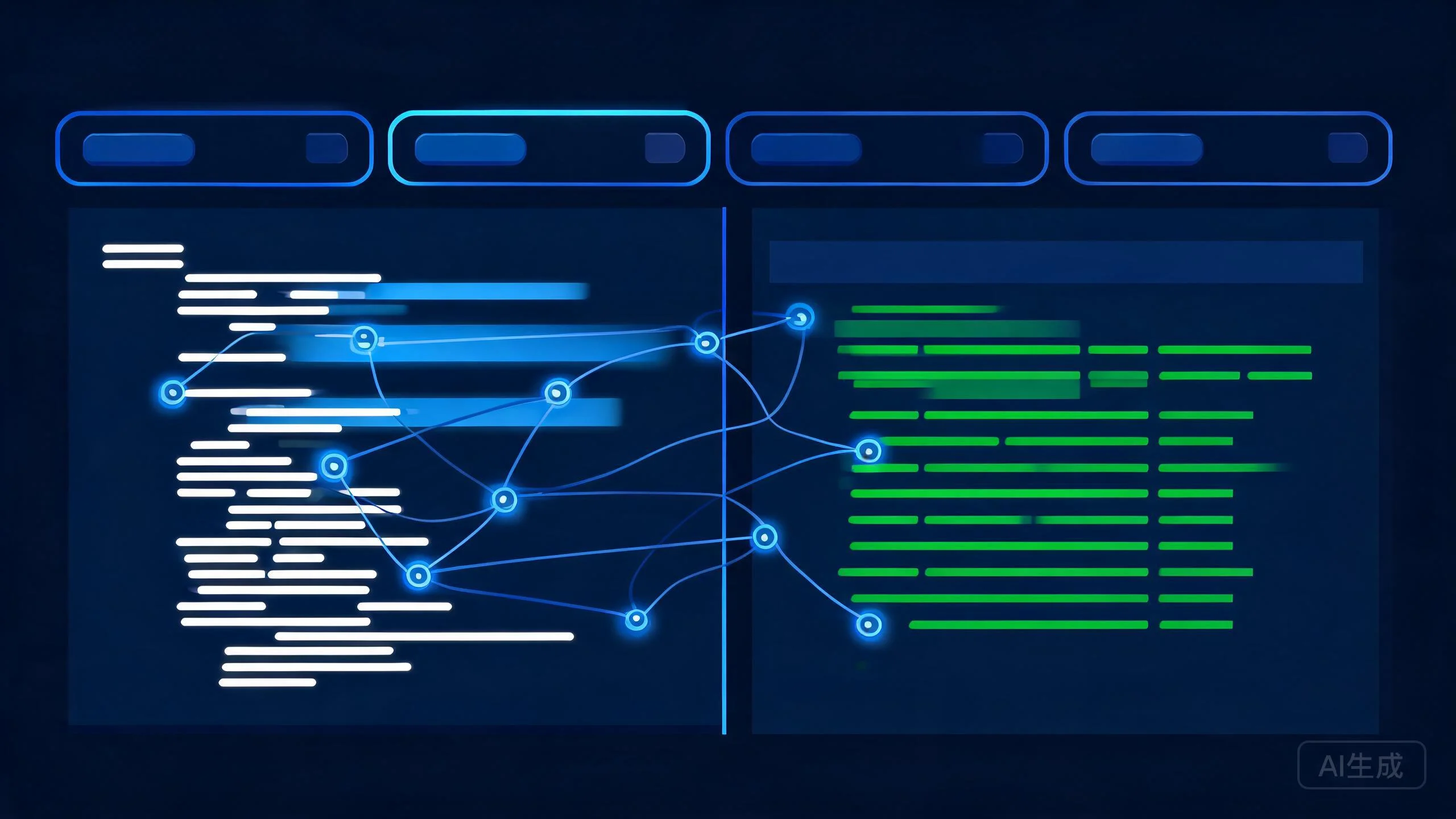
The practical advantage appears when the model is allowed to complete an engineering loop:
Inspect the repository and task.
Form a plan.
Edit the relevant files.
Run tests or terminal commands.
Interpret failures.
Revise the implementation.
Report the final changes and unresolved risks.
For simple code explanation, boilerplate generation, or syntax conversion, a smaller and faster model may provide a better cost-to-latency ratio.
How Do the 1M Context Window and Reasoning Levels Affect Coding Work?
GLM-5.3 supports a one-million-token context window and up to 128K output tokens through Z.ai’s API. This allows an agent to retain substantially more source code, documentation, tool output, and conversation history than a conventional coding assistant.
However, context capacity is a ceiling, not a promise of perfect repository comprehension. Filling the request with every file can increase latency, cost, and distraction. Relevant retrieval, repository maps, dependency information, and targeted file selection are still useful.
The larger window is most valuable when the task genuinely depends on distant information—for example, when an API change affects application code, tests, infrastructure definitions, and internal documentation.
GLM-5.3 always operates with reasoning enabled. Attempting to disable it produces an error. Developers can instead select one of three reasoning-effort levels:
Reasoning Level | Best Used For |
|---|---|
low | Code explanation, small edits, formatting, and straightforward transformations |
high | Moderate debugging, test generation, and multi-file implementation |
max | Architecture decisions, difficult defects, repository refactoring, and long agent runs |
max is the default and Z.ai’s recommendation for complex coding. It should not automatically be used for every request. Teams should compare completion quality against latency and token consumption, particularly for high-volume developer tools.
When migrating from an earlier model, review the GLM-5.3 migration requirements. Applications that send thinking.type: "disabled" must be updated before switching model IDs.
What Do the Current GLM-5.3 Benchmarks Actually Show?
The available results show a substantial improvement over GLM-5.2 on agentic coding. They do not prove that GLM-5.3 will outperform every competing model in every language, framework, or repository.
Z.ai reports the following results:
Benchmark | GLM-5.2 | GLM-5.3 | What It Tests |
|---|---|---|---|
Terminal-Bench 3.0 | 4.6 | 28.3 | Executable tasks in terminal environments |
DeepSWE v1.1 | 46.2 | 66.9 | Software-engineering agent performance |
Agents’ Last Exam (CLI) | 23.8 | 28.5 | Broader command-line agent tasks |
Z.ai Code Bench, Max | 23.4% | 34.5% | Private, realistic coding-agent scenarios |
On Z.ai Code Bench, GLM-5.3 reached 34.5% while using approximately 75K output tokens per task. GLM-5.2 reached 23.4% while using about 96K. The result suggests that the newer model completed more tasks while generating fewer output tokens.
The frequently cited “50% better coding performance” is a relative improvement, not a 50-percentage-point increase. Moving from 23.4% to 34.5% represents roughly a 47% relative gain.
These figures still require careful interpretation:
Most are model-developer results.
Z.ai Code Bench is private and cannot be independently reproduced.
Agent harnesses, tool permissions, time limits, and reasoning budgets affect scores.
Terminal-Bench 3.0 results should not be compared directly with Terminal-Bench 2.1 results.
For example, Artificial Analysis evaluates Terminal-Bench 2.1 with the Terminus 2 harness, an E2B sandbox, 89 verified tasks, and three repetitions. That methodology differs from Terminal-Bench 3.0. Treating their scores as a single leaderboard would produce a misleading comparison.
The useful conclusion is narrower: GLM-5.3 shows clear progress in executable, long-horizon coding, but teams still need repository-specific evaluation.
What Limits Should Developers Check Before Using GLM-5.3?
GLM-5.3 has several practical limits that should be tested before production adoption.
First, it is text-only. It cannot directly inspect UI screenshots, architecture diagrams, videos, or visual error states. A multimodal model is a better choice when the task begins with visual evidence.
Second, reasoning cannot be disabled. Even low effort still uses reasoning, which may make the model inefficient for autocomplete, simple classification, or other latency-sensitive requests.
Third, long context does not eliminate retrieval or context management. Duplicate files, generated assets, dependency bundles, and stale logs can consume tokens without improving the result.
Fourth, strong benchmark scores do not guarantee safe autonomous operation. Coding agents can execute incorrect commands, modify unrelated files, introduce vulnerable dependencies, or pass incomplete tests. Use permission boundaries, isolated environments, version control, automated checks, and human review.
Finally, provider-level context limits, output limits, supported parameters, model IDs, and pricing can differ from the model developer’s API. Verify the actual deployment configuration instead of assuming that every host exposes all native GLM-5.3 capabilities.
How to Test GLM-5.3 on SiliconFlow
GLM-5.3 is now available on SiliconFlow. Begin by opening the SiliconFlow Model Library and checking the current model ID, pricing, context and output limits, and supported parameters for the SiliconFlow deployment. These details may differ from the model developer’s direct API.
A practical validation process includes the following steps:
Open the GLM-5.3 model page and copy the exact SiliconFlow model ID.
Run a representative coding prompt in the Playground.
Define the tests or acceptance criteria that determine whether the output is usable.
Create a SiliconFlow API key and connect the model to your existing evaluation harness.
Repeat the test across multiple tasks and reasoning settings.
Compare completion quality, latency, token use, retries, and manual correction time.
The OpenAI SDK can be used with SiliconFlow’s compatible endpoint. Store the API key and current model ID in environment variables rather than placing them directly in the application:
Set SILICONFLOW_GLM53_MODEL_ID to the exact identifier shown on the current model page. Add reasoning and tool parameters only after confirming that the SiliconFlow deployment supports their documented form.
A meaningful evaluation should use 20 to 50 representative tasks rather than one successful prompt. Measure:
Task acceptance rate
Unit and integration test results
Invalid or unnecessary tool calls
End-to-end latency
Input, cached-input, and output usage
Manual corrections and out-of-scope changes

SiliconFlow’s unified endpoint allows teams to test multiple available models through a consistent API pattern. The Playground supports initial inspection, while the serverless API allows evaluation without provisioning separate inference infrastructure.
The same endpoint can also be configured in compatible coding tools. SiliconFlow provides setup instructions for Cline and Roo Code.
Decide Whether GLM-5.3 Fits Your Development Workflow
GLM-5.3 is a strong candidate for repository-scale debugging, terminal work, multi-tool agents, and long-running engineering tasks. It is a weaker fit for visual workflows, instant autocomplete, and high-volume requests where response speed matters more than deep reasoning.
Test representative tasks in the SiliconFlow Playground, then measure completion rate, tool-call accuracy, latency, token use, and review effort through the API. Use GLM-5.3 where its agentic capabilities produce better accepted outcomes, while routing routine work to faster models when appropriate.
FAQs About GLM-5.3
Q1. Can GLM-5.3 Be Self-Hosted?
No. As of August 22, 2026, public GLM-5.3 weights have not been released for general self-hosting. API and hosted-platform access are available, but developers should wait for the official model card and license before planning local deployment or applying GLM-5.2’s license terms to GLM-5.3.
Q2. Which Programming Languages Does GLM-5.3 Support?
No complete programming-language matrix has been published. GLM-5.3 is a general coding model rather than a language-specific compiler. Test it against your actual languages, frameworks, package managers, build tools, and repository conventions before expecting consistent performance across different technology stacks.
Q3. What Is GLM-5.3’s Knowledge Cutoff?
Z.ai has not publicly disclosed a specific knowledge-cutoff date. Treat version-sensitive framework, library, and security information as potentially outdated. Supply current documentation through prompts or retrieval, and verify generated code against maintained upstream documentation, changelogs, and package registries.
Q4. Can GLM-5.3 Be Fine-Tuned?
No public GLM-5.3 fine-tuning workflow is currently documented. Developers can control behavior through system instructions, examples, tool definitions, retrieved context, and reasoning effort. Do not assume that fine-tuning support available for another GLM release also applies to this model.
Q5. Can GLM-5.3 Work With Private Repositories?
Yes. An authorized coding agent can provide GLM-5.3 with selected files from a private repository. Teams should minimize transmitted context, remove credentials, restrict tool permissions, and review the deployment provider’s current retention, security, access-control, and data-processing terms before using proprietary code.