Table of Contents
Cline is an AI coding agent that lives in your editor and terminal. It can read files, write code, run terminal commands, use a browser, and help you build features through natural conversation, ensuring you're always in control, as every action requires your explicit approval.
It works across all major coding environments, VS Code, Cursor, Windsurf, Void, JetBrains, and the Cline CLI, so you can keep your existing stack without switching.
To get started, you'll need to connect Cline to an external LLM API. In this guide, we'll show you how to integrate SiliconFlow's APIs into Cline, giving you access to frontier coding models like GLM-5.1, MiniMax M2.5, and Kimi K2.5 at cost-effective pricing.
Step 1: Prerequisites
Get Your SiliconFlow API Key
Before you begin, ensure you have a valid SiliconFlow account:
Register a SiliconFlow account at https://cloud.siliconflow.com/. You can sign up with Google or GitHub.
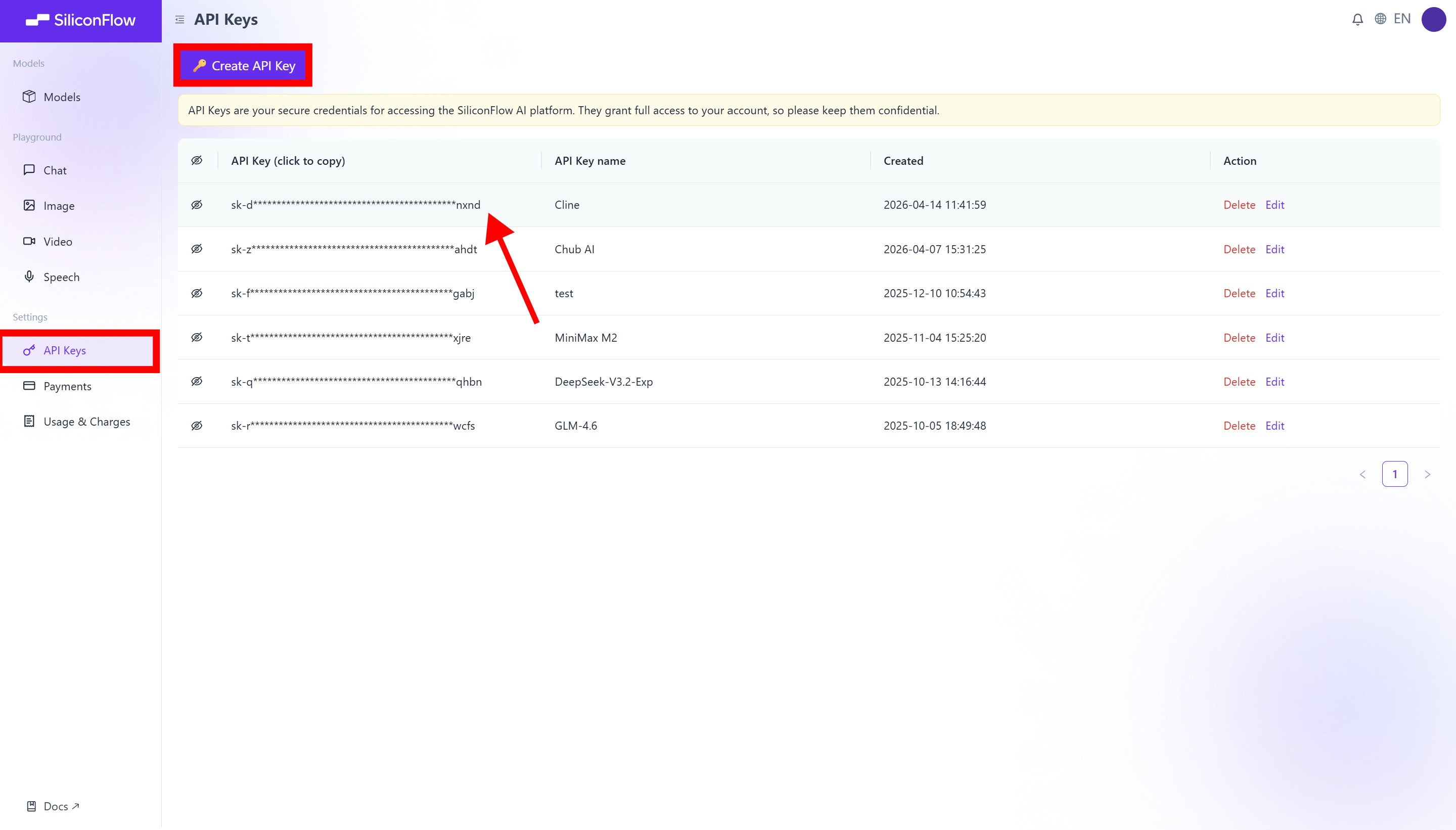
Log in and navigate to API Keys in the dashboard.
Click 🔑Create API Key and add a name to your key to help you identify it later, then confirm to create it.
Click the API key to copy it automatically.
Please keep your API key somewhere safe, as you'll need it to configure Cline in the next step.
Step 2: Install Cline
Next, install the Cline extension in your development environment.
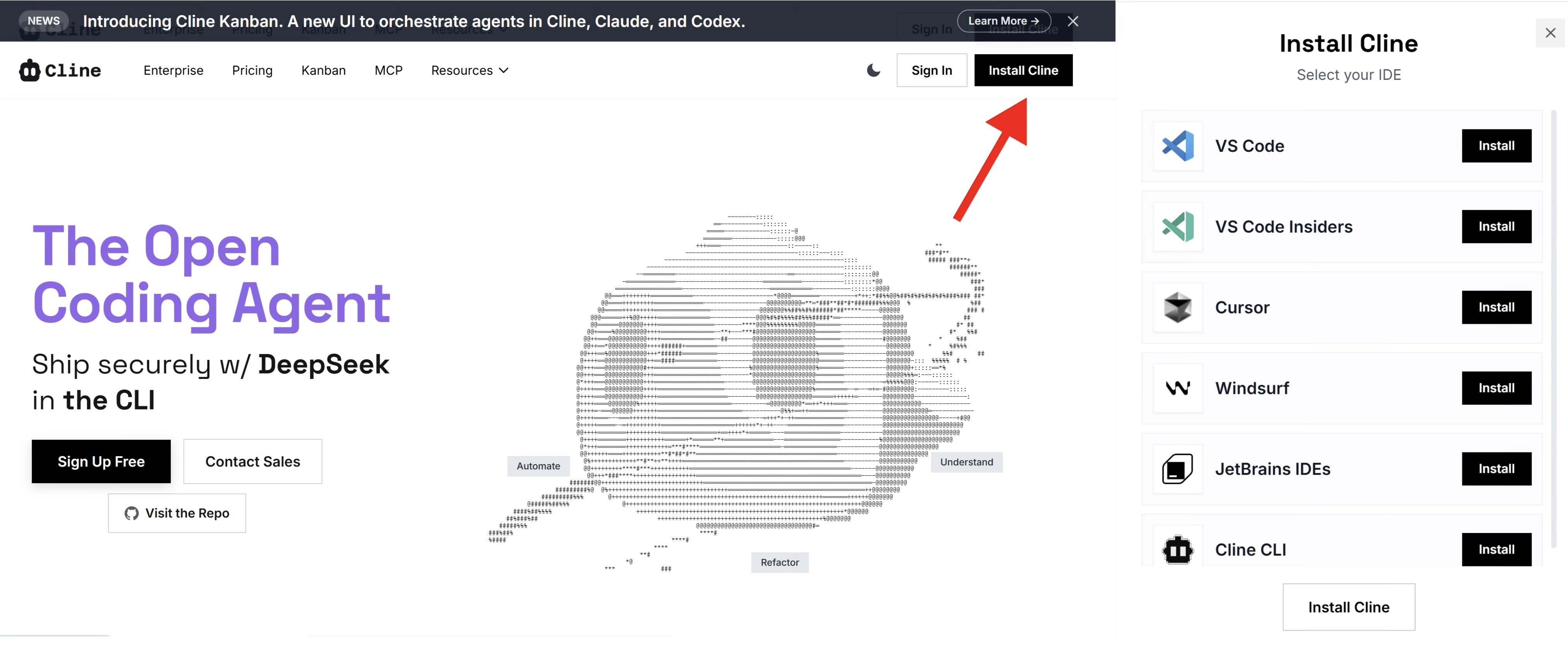
Visit the official Cline website: https://cline.bot
Click Install Cline in the top-right corner.
Choose your preferred IDE (e.g., VS Code) and proceed with installation.
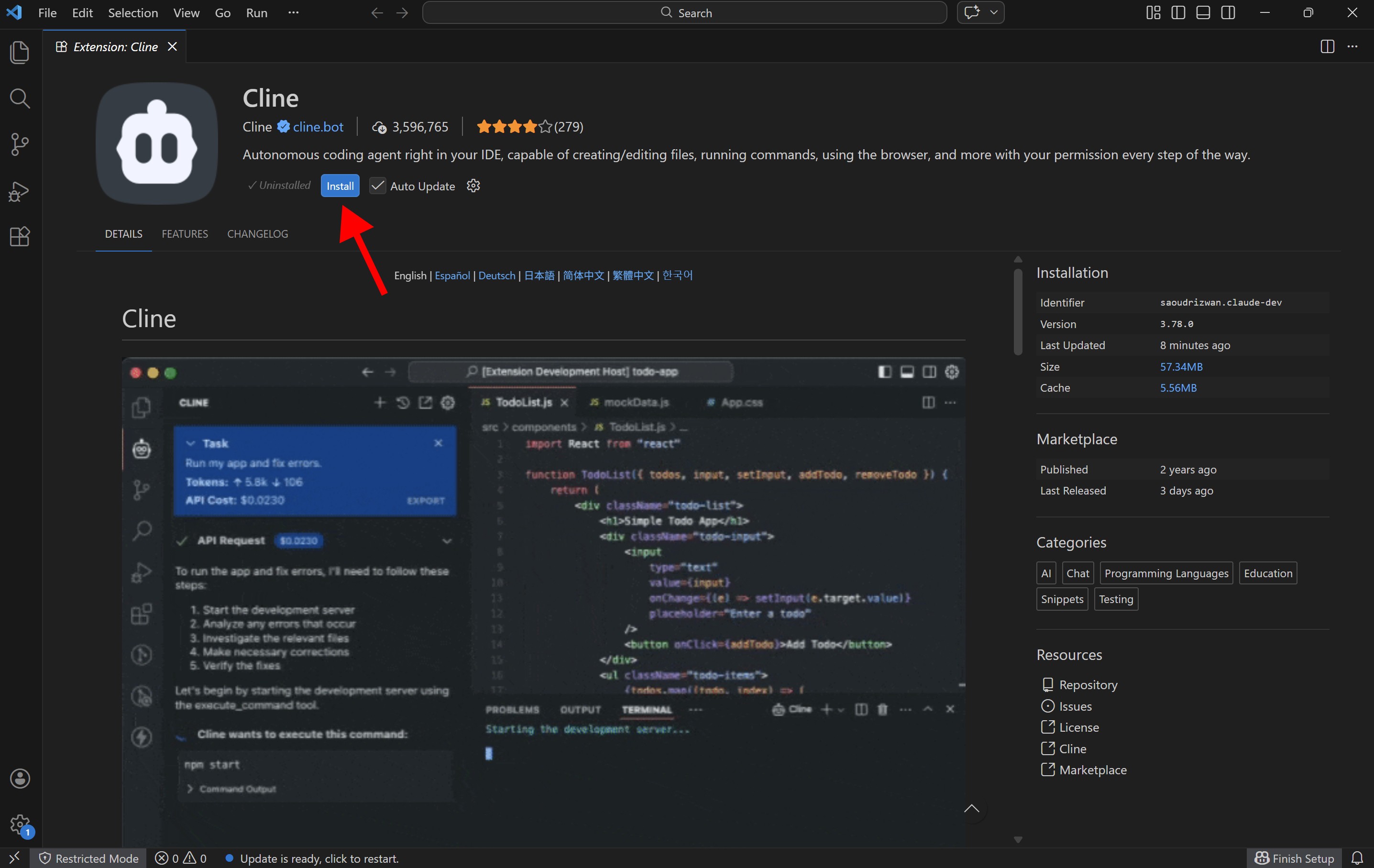
When prompted, allow the link to open in the associated application.
The VS Code extension page will open automatically; Click Install to proceed.
In this guide, we demonstrate the setup using VS Code. For installation details on other environments like Cursor, Windsurf, JetBrains etc., please refer to the official Cline documentation: https://docs.cline.bot/getting-started/installing-cline
Step 3: Configure SiliconFlow APIs
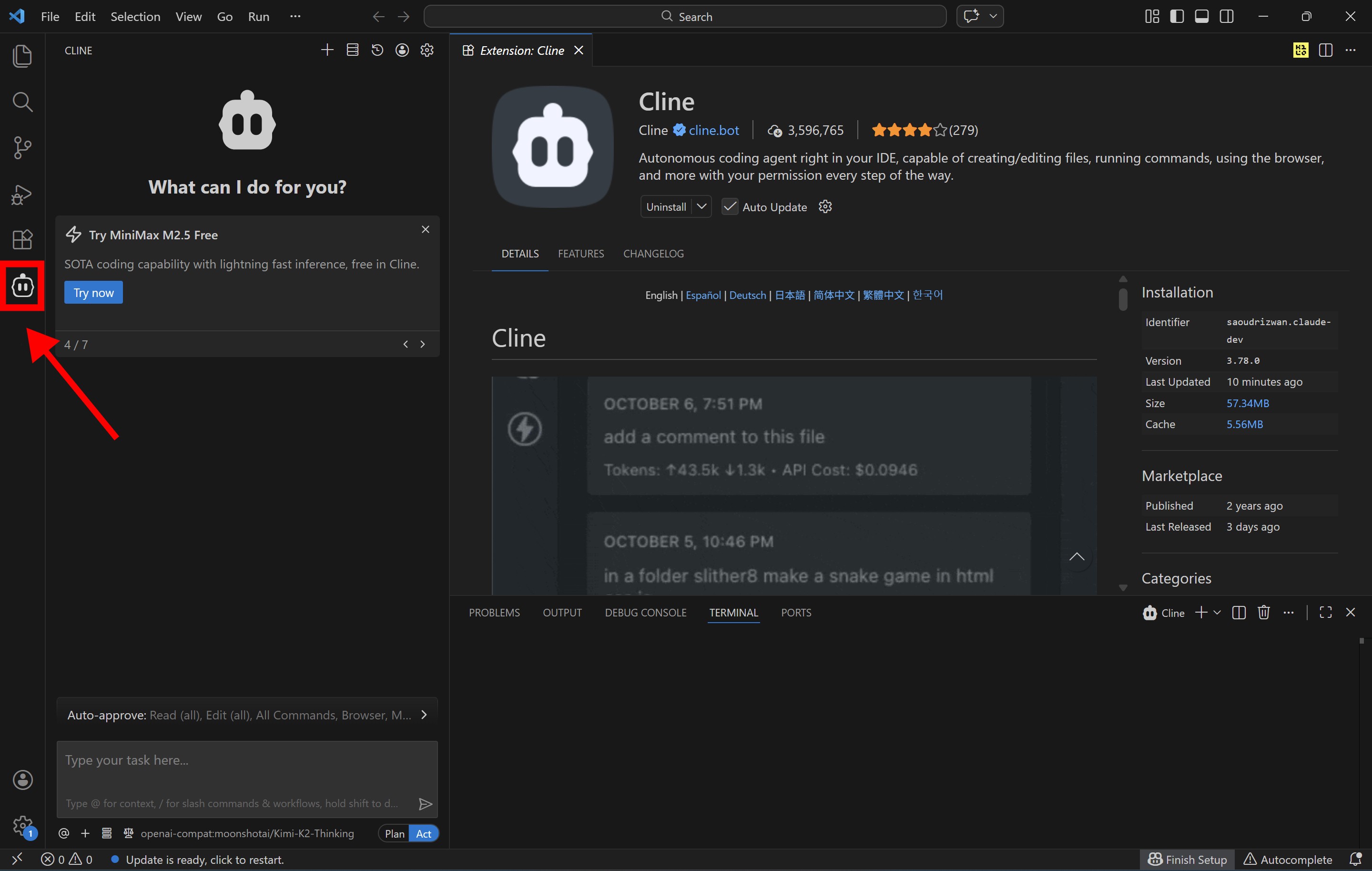
Open Cline in VS Code: After installing the Cline extension, you will find the Cline icon in the Activity Bar on the left side of VS Code and click the icon to open the Cline chat interface
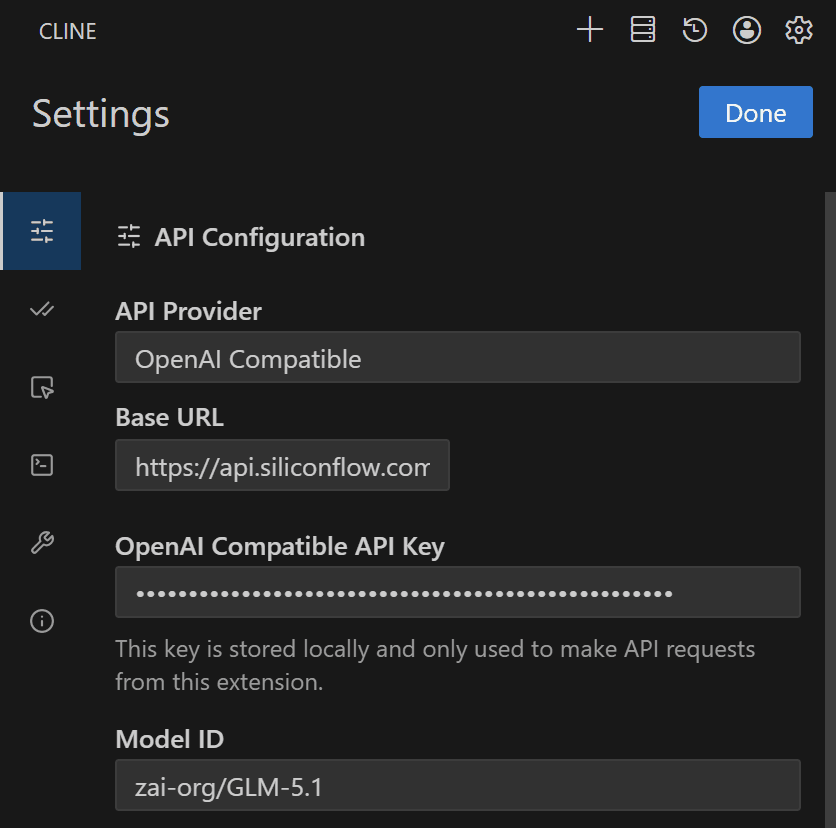
Click the ⚙️ Settings (gear icon) in the top-right corner to configure your API provider
API Provider: OpenAI Compatible
Base URL: https://api.siliconflow.com/v1
OpenAI Compatible API Key: Paste Your SiliconFlow API Key Here
Model ID: Enter the model you want to use, for example zai-org/GLM-5.1. You can browse the full model list at SiliconFlow's model library.
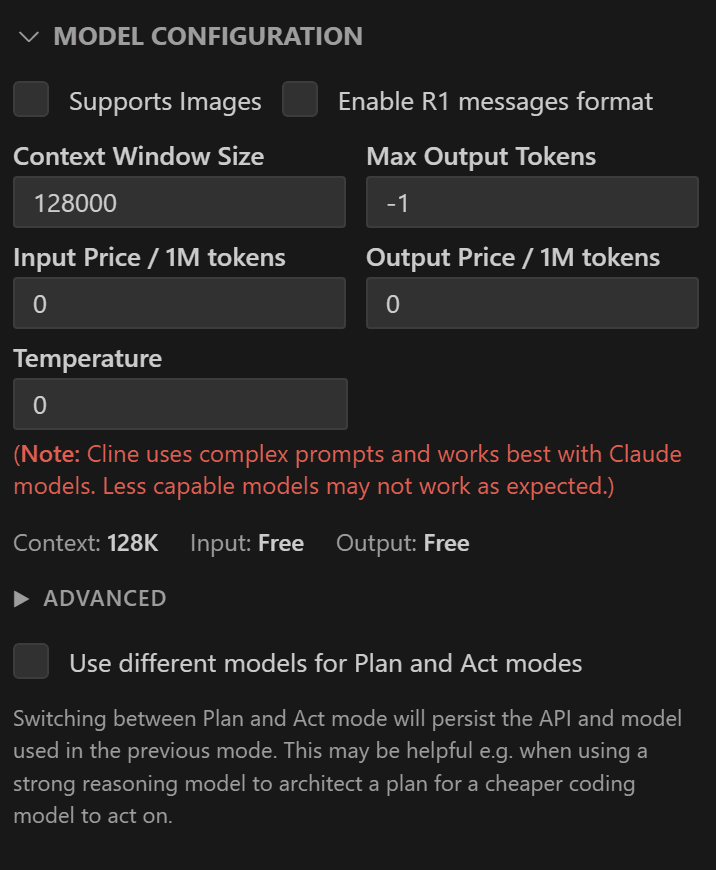
Customize model configuration (optional)
Cline allows you to further customize model behavior. For example, you can configure:
Support Images
Enable R1 message format
Context window size
Max output tokens
Temperature
Input and output pricing reference
It also supports different models for different modes:
Plan Mode model
Act Mode model
This allows you to use a cheaper planning model and a stronger coding model for execution.
Step 4: Start Building with Cline
Once your SiliconFlow API is configured, you're ready to start building with Cline.
Before Using: Two Things You Need to Know
Plan Mode vs Act Mode
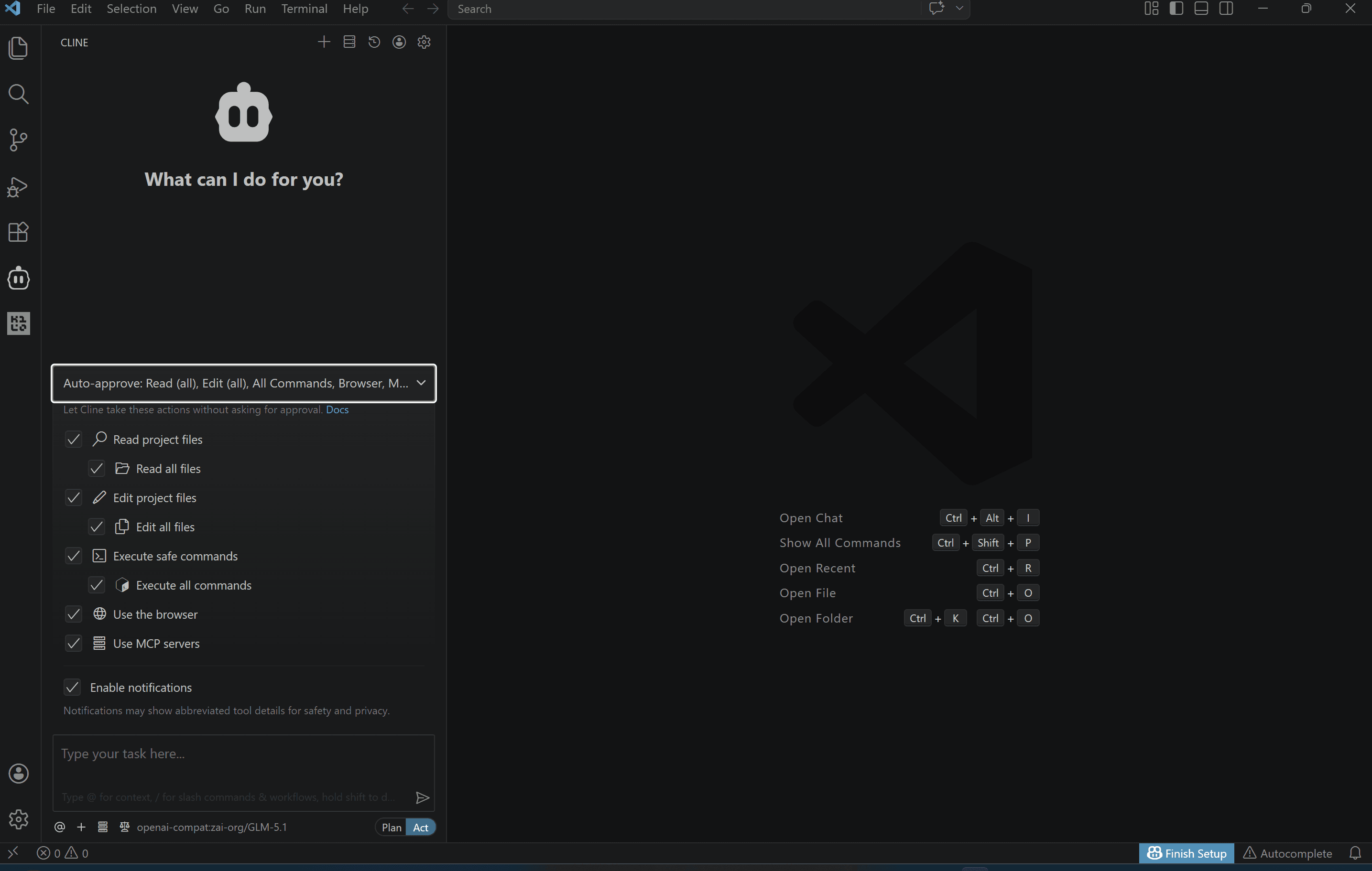
At the bottom of the Cline panel, you'll see a toggle button that switches between two modes:
Plan mode: In this mode, Cline only "talks". It analyzes your request and walks you through its approach, but won't create or modify any files. Use this when you want to discuss requirements or clarify your idea before writing any code.
Act mode: Cline starts creating files and writing code. Once you've aligned on the approach in Plan mode, click the toggle to switch to Act and Cline will begin proposing actual file changes.
Auto-Approve Settings
By default, Cline asks for your explicit approval before every file creation, file edit, or terminal command. If you'd like Cline to handle certain actions autonomously, you can configure this in the auto-approve settings, for example, allowing Cline to read files or run terminal commands without prompting you each time.
Now, you're good to go! Start building your projects with Cline powered by SiliconFlow APIs.
Which Model Should I Start With?
Based on Cline OpenRouter monthly usage, here are the most-used models by Cline users right now:
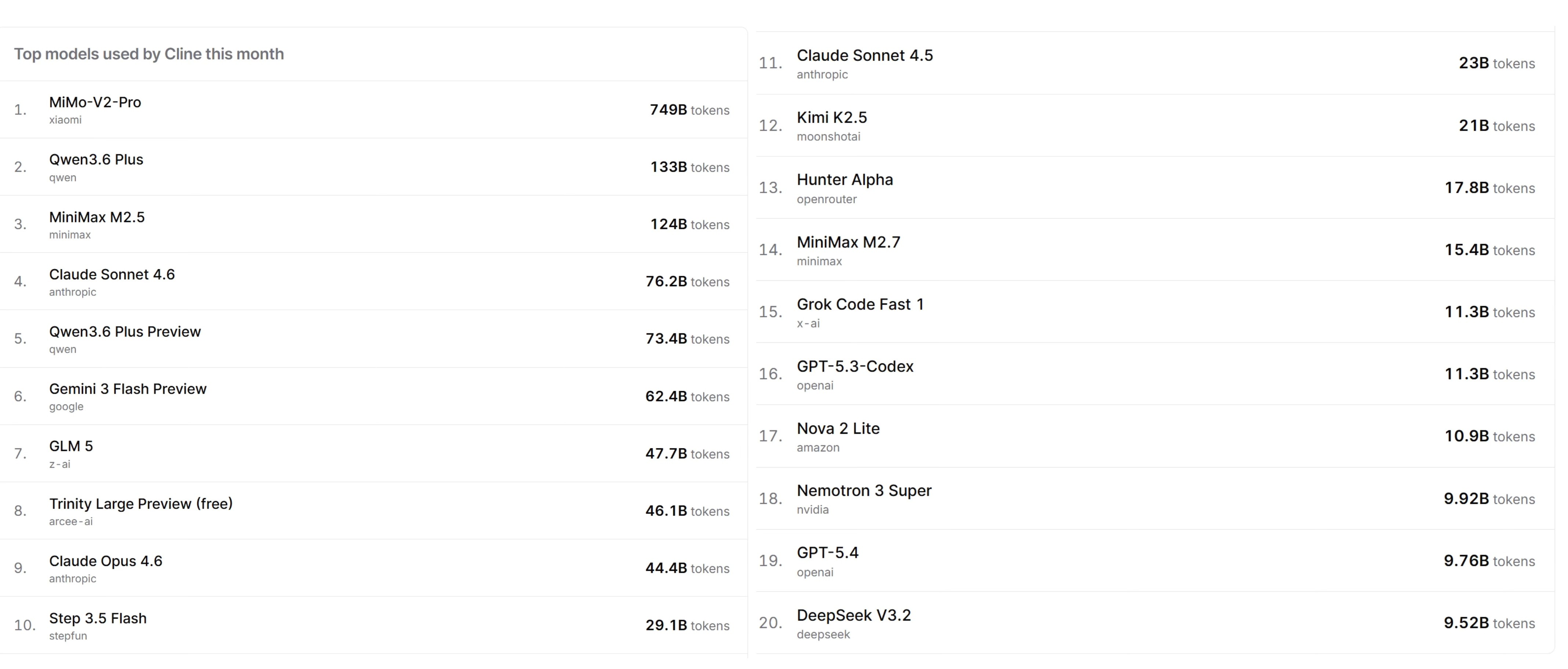
Top open-source models on this list are available directly on SiliconFlow, including MiniMax M2.5, GLM 5, Step 3.5 Flash, Kimi K2.5, and DeepSeek V3.2, so you can start with what the community is already using at cost-effective pricing.
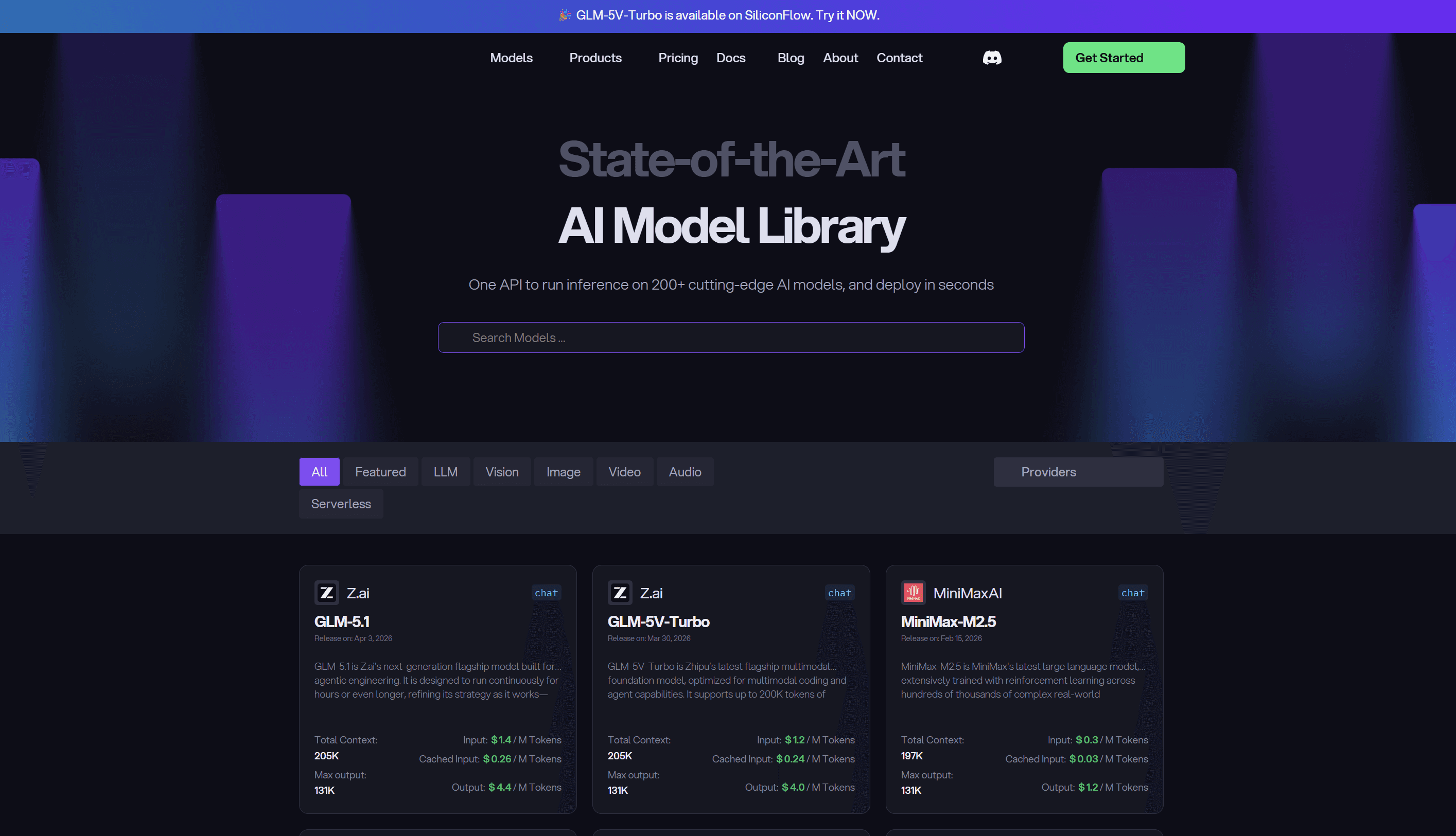
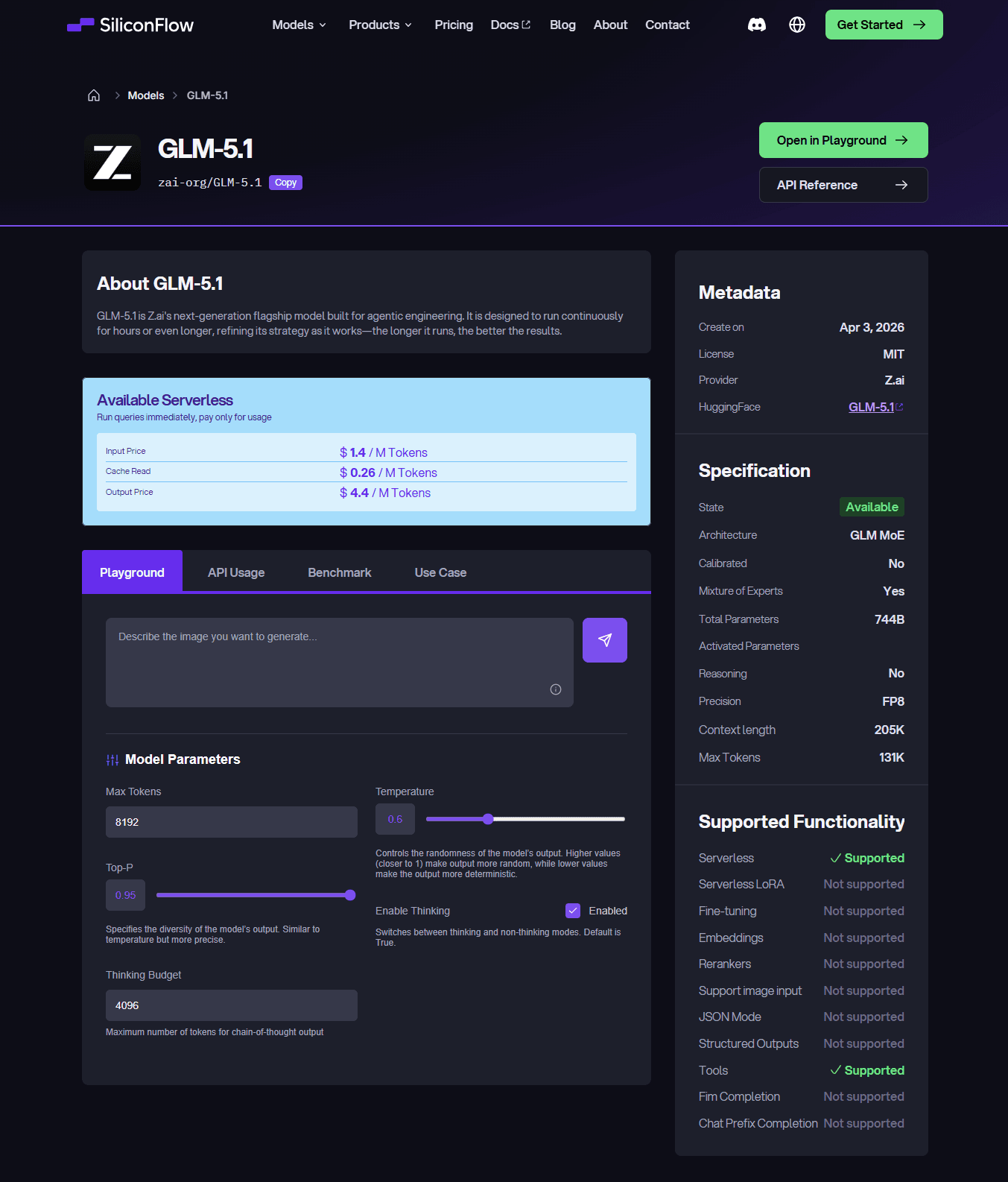
You can browse the full catalog in the SiliconFlow Model Library: https://www.siliconflow.com/models
Each model card provides key information such as: Context window, Pricing, Precision, Supported modalities, Feature capabilities etc., to help you find the best fit for your project.
Already Using OpenRouter?
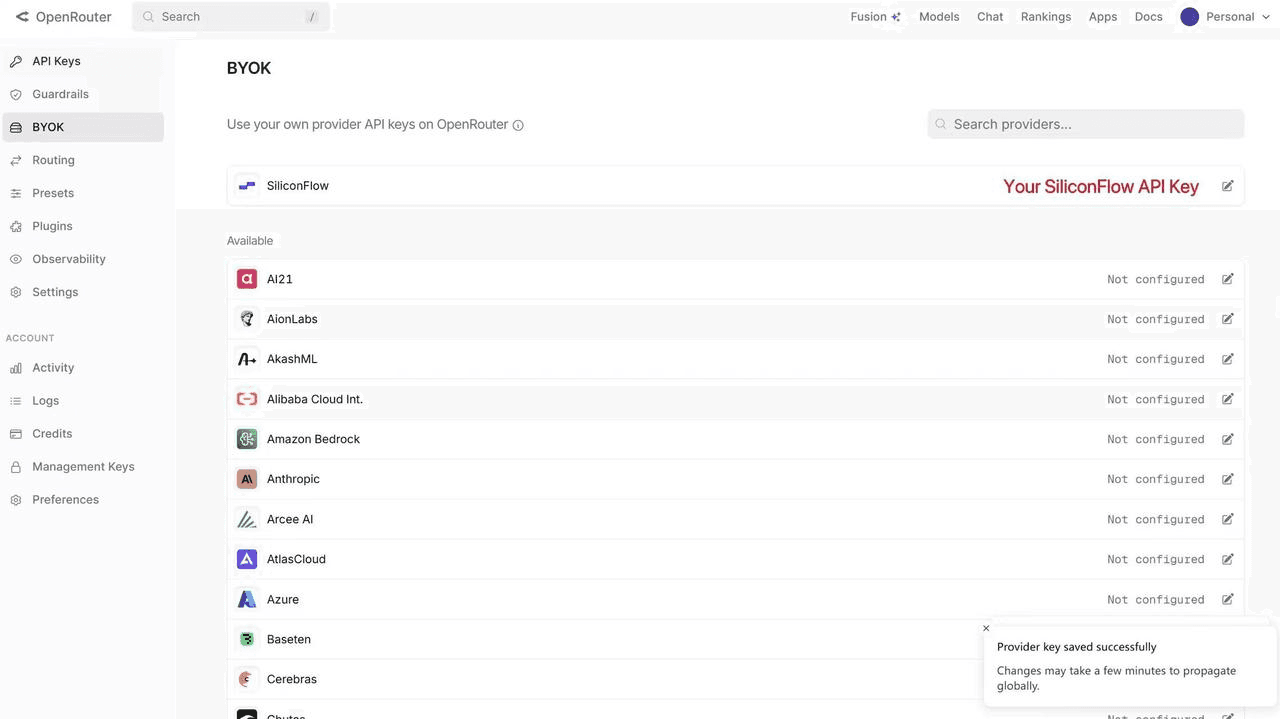
If you're managing models across multiple platforms, you can now connect your SiliconFlow API key to OpenRouter using BYOK, so you get a unified workflow without switching between accounts.
Once connected:
Requests draw from your SiliconFlow balance first
Billing and rate limits stay in your SiliconFlow account
OpenRouter's fallback routing still works to improve reliability
Bonus: OpenRouter waives platform fees on your first 1M BYOK requests per month.
Resources
Cline
Website: https://cline.bot/
Docs: https://docs.cline.bot/
Github: https://github.com/cline/cline
Discord: https://discord.gg/cline
OpenRouter
BYOK Setting: https://openrouter.ai/workspaces/default/byok
Cline OpenRouter Usage: https://openrouter.ai/apps/cline
SiliconFlow on OpenRouter: https://openrouter.ai/provider/siliconflow
SiliconFlow
Website: https://siliconflow.com
API Documentation: https://docs.siliconflow.com
Model Library: https://siliconflow.com/models